
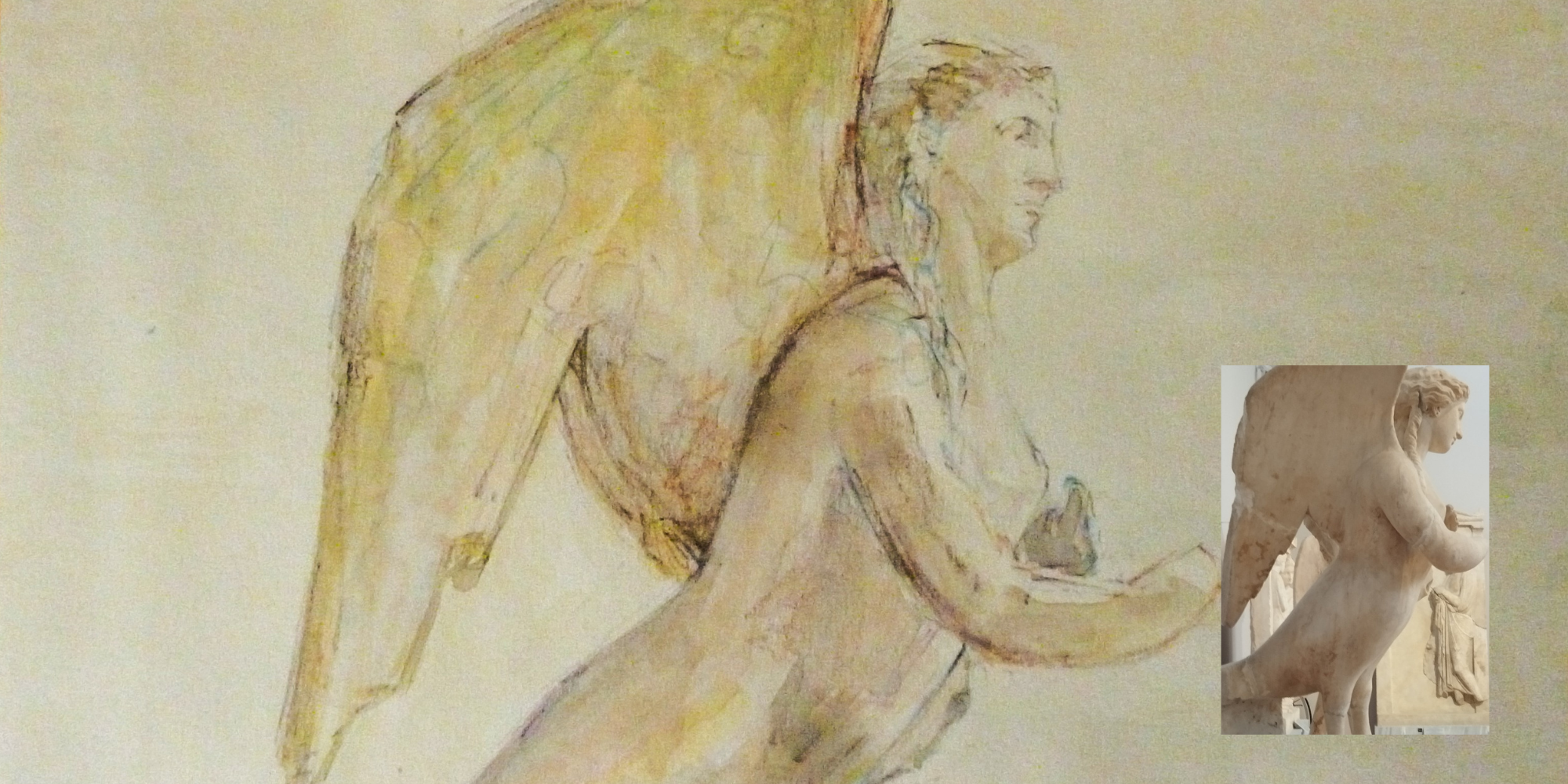
Οι Μούσες του κάτω κόσμου – Muses of the Underworld
Στις αίθουσες του Εθνικό Αρχαιολογικό Μουσείο, ανάμεσα σε κούρους, θεότητες και ήρωες, στέκονται κάποια από τα πιο συγκλονιστικά γλυπτά της αρχαιότητας: οι Σειρήνες του Κεραμεικού. Δεν πρόκειται για τις μεταγενέστερες «γοργόνες» της λαϊκής φαντασίας, αλλά για αρχαία υβριδικά πλάσματα με σώμα πουλιού και πρόσωπο γυναίκας· όντα που κινούνται ανάμεσα στον κόσμο των ζωντανών και των νεκρών, της τέχνης και του τρόμου, της μουσικής και της απώλειας.
Στην αρχαία ελληνική σκέψη, οι Σειρήνες υπήρξαν πολύ περισσότερα από επικίνδυνα τέρατα της Οδύσσειας. Η μορφή τους συνδέθηκε βαθιά με το πένθος, τη μετάβαση της ψυχής και τη μνήμη των νεκρών. Για αυτόν ακριβώς τον λόγο συναντώνται συχνά ως επιτύμβια γλυπτά, ιδιαίτερα στην κλασική Αθήνα. Οι πιο εντυπωσιακές μαρμάρινες Σειρήνες που σώζονται σήμερα βρέθηκαν στο αρχαίο νεκροταφείο του Κεραμεικού και χρονολογούνται στον 4ο αιώνα π.Χ.
Ανάμεσά τους ξεχωρίζει η περίφημη Σειρήνα με τη Λύρα (αρ. ευρ. 774), σμιλεμένη από πεντελικό μάρμαρο γύρω στο 370 π.Χ. Το γλυπτό παρουσιάζει τη φτερωτή μορφή με ανοιγμένα φτερά να κρατά μια λύρα από καβούκι χελώνας, σαν να τραγουδά έναν αιώνιο θρήνο για τον νεκρό. Το έργο πλαισίωνε το ταφικό μνημείο του Αθηναίου ιππέα Δεξίλεω, ο οποίος σκοτώθηκε στη μάχη της Κορίνθου το 394/393 π.Χ. Η μορφή δεν αποπνέει απειλή· αντίθετα, εκπέμπει μια παράξενη γαλήνη, σαν η μουσική της να λειτουργεί ως γέφυρα ανάμεσα στους κόσμους.
Εξίσου συγκλονιστική είναι η λεγόμενη Θρηνούσα Σειρήνα (αρ. ευρ. 2583), όπου το σώμα λυγίζει από τον πόνο και τα χέρια τραβούν τα μαλλιά σε μια αρχαία χειρονομία πένθους. Το πρόσωπό της δεν είναι τερατώδες αλλά ανθρώπινο, σχεδόν οικείο. Η λύπη της μοιάζει διαχρονική. Μέσα από αυτά τα γλυπτά, η κλασική τέχνη μετατρέπει το «τέρας» σε φορέα συγκίνησης και μεταφυσικής παρηγοριάς.
Η ίδια η προέλευση των Σειρήνων παραμένει αινιγματική, όπως ταιριάζει σε πλάσματα που ανήκουν στο μεταίχμιο. Ο Σοφοκλής αναφέρει ως πατέρα τους τον αρχέγονο θαλάσσιο θεό Φόρκυ, ενώ οι περισσότεροι μεταγενέστεροι συγγραφείς —όπως ο Απολλόδωρος, ο Υγίνος και ο Παυσανίας— θεωρούν πατέρα τους τον ποτάμιο θεό Αχελώο. Για μητέρες τους αναφέρονται μορφές όπως η Μελπομένη, η Καλλιόπη ή η Τερψιχόρη, δηλαδή Μούσες συνδεδεμένες με την ποίηση, τη μουσική και το τραγούδι. Έτσι, οι Σειρήνες μοιάζουν να γεννιούνται από την ένωση δύο στοιχείων: του νερού και της τέχνης. Από τη μία η θάλασσα και το ποτάμι· από την άλλη η μουσική, η φωνή και η έμπνευση.
Δεν είναι τυχαίο ότι το τραγούδι αποτελούσε το πιο ισχυρό τους όπλο. Στην Οδύσσεια, οι Σειρήνες δεν επιτίθενται με βία· σαγηνεύουν μέσω της γνώσης και της μουσικής. Υπόσχονται στον Οδυσσέα ότι γνωρίζουν τα πάντα: όσα έγιναν στην Τροία, όσα συμβαίνουν στον κόσμο, ακόμη και όσα κρύβει το μέλλον. Η γοητεία τους δεν είναι μόνο αισθησιακή· είναι πνευματική. Ο Οδυσσέας, θέλοντας να ακούσει το τραγούδι χωρίς να χαθεί, διατάζει τους συντρόφους του να τον δέσουν στο κατάρτι ενώ εκείνοι έχουν κλείσει τα αυτιά τους με κερί. Έτσι γίνεται ο μοναδικός θνητός που άκουσε το τραγούδι των Σειρήνων και επέζησε.
Σύμφωνα με μεταγενέστερες παραδόσεις, αυτή η αποτυχία υπήρξε μοιραία για τις ίδιες. Ο Υγίνος αναφέρει πως οι Σειρήνες ήταν καταδικασμένες να πεθάνουν αν κάποιος κατάφερνε να αντισταθεί στη γοητεία τους. Μετά το τέχνασμα του Οδυσσέα, εξαφανίστηκαν ή έπεσαν στη θάλασσα. Άλλοι μύθοι τις συνδέουν με την Περσεφόνη: πριν αποκτήσουν φτερά και νύχια, ήταν νεαρές συνοδοί της θεάς. Όταν ο Άδης την άρπαξε, η Δήμητρα τις μεταμόρφωσε σε πτηνόμορφα όντα είτε για να τη βοηθήσουν στην αναζήτηση είτε ως τιμωρία επειδή δεν την προστάτευσαν.
Αυτή η διττή φύση —θελκτική αλλά και νεκρική— εξηγεί γιατί οι Σειρήνες απέκτησαν τόσο ιδιαίτερη θέση στην αρχαία τέχνη. Δεν ήταν απλώς τέρατα της θάλασσας· ήταν «μούσες του Κάτω Κόσμου». Πλάσματα που τραγουδούσαν ανάμεσα στη ζωή και τον θάνατο. Ίσως γι’ αυτό οι αρχαίοι τις τοποθετούσαν πάνω από τάφους: όχι μόνο για να θρηνούν, αλλά και για να συνοδεύουν την ψυχή στο τελευταίο της ταξίδι.
Κοιτάζοντας σήμερα τις μαρμάρινες Σειρήνες του Μουσείου, είναι δύσκολο να μη νιώσει κανείς ότι συνεχίζουν ακόμη να τραγουδούν. Όχι πια για να παρασύρουν ναυτικούς, αλλά για να μας θυμίσουν κάτι βαθιά ανθρώπινο: πως η τέχνη και η μνήμη έχουν τη δύναμη να νικούν τη λήθη.
Με το πέρασμα των αιώνων, όμως, η μορφή των Σειρήνων άρχισε σταδιακά να μεταμορφώνεται. Οι αρχαίες ελληνικές απεικονίσεις τις παρουσίαζαν σχεδόν αποκλειστικά ως πλάσματα με σώμα πουλιού και κεφάλι γυναίκας· ήδη από την ελληνιστική εποχή, όμως, και κυρίως κατά τους ύστερους ρωμαϊκούς και μεσαιωνικούς χρόνους, η εικόνα αυτή άρχισε να συγχέεται με άλλες θαλάσσιες μυθολογικές μορφές, οδηγώντας τελικά στη γνωστή σήμερα μορφή της «γοργόνας» με ουρά ψαριού.
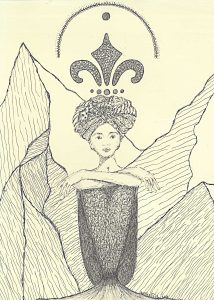
Aristea Gravou, Mermaid Love, japanese jel ink on paper, 2021
Η μεταμόρφωση αυτή δεν συνέβη ξαφνικά ούτε τυχαία. Οι πολιτισμοί της Μεσογείου και της Εγγύς Ανατολής αντάλλασσαν συνεχώς μύθους, σύμβολα και εικονογραφικά μοτίβα. Ήδη από τη Μεσοποταμία και τη Συρία υπήρχαν θεότητες και δαιμονικές μορφές που συνδέονταν με το νερό και απεικονίζονταν με ανθρώπινο επάνω μέρος και ιχθυόμορφο κάτω σώμα. Η συριακή θεότητα Ατάργατις, για παράδειγμα, θεωρείται μία από τις αρχαιότερες μορφές που συνδέθηκαν με τη γοργονόμορφη απεικόνιση. Η λατρεία της πέρασε στον ελληνιστικό κόσμο, όπου οι εικόνες θαλάσσιων γυναικείων υπάρξεων άρχισαν να πολλαπλασιάζονται.
Παράλληλα, στον ελληνικό κόσμο υπήρχαν ήδη θαλάσσιες νύμφες, όπως οι Νηρηίδες, αλλά και μορφές όπως η Σκύλλα, που σχετίζονταν με τη θάλασσα και τον κίνδυνο. Κατά τους πρώτους χριστιανικούς και βυζαντινούς αιώνες, οι παλαιές παγανιστικές μορφές συγχωνεύτηκαν συχνά μεταξύ τους μέσα στη λαϊκή φαντασία. Έτσι, οι Σειρήνες άρχισαν να αποσυνδέονται από το πτηνόμορφο σώμα τους και να αποκτούν πιο «υδάτινα» χαρακτηριστικά, καθώς η ίδια η λέξη είχε πλέον συνδεθεί περισσότερο με τη θάλασσα παρά με τον Κάτω Κόσμο.
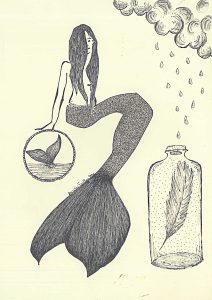
Aristea Gravou, Mermaid Flow, japanese jel ink on paper, 2021
Καθοριστικό ρόλο σε αυτή τη μεταβολή έπαιξε και η μεσαιωνική Ευρώπη. Στα περίφημα bestiaria —τα εικονογραφημένα βιβλία ζώων και τεράτων του Μεσαίωνα— οι Σειρήνες παρουσιάζονται σχεδόν πάντα ως γυναίκες με ουρά ψαριού, σύμβολα πειρασμού, ματαιοδοξίας και θανάσιμης γοητείας. Η Εκκλησία χρησιμοποιούσε συχνά την εικόνα τους αλληγορικά, ως προσωποποίηση της αμαρτίας που παρασύρει τον άνθρωπο μακριά από τη σωτηρία, όπως ακριβώς το τραγούδι τους παρέσυρε τους ναυτικούς στα βράχια.
Είναι ενδιαφέρον πως, ενώ η μορφή τους άλλαξε, ο πυρήνας του μύθου παρέμεινε σχεδόν αναλλοίωτος. Είτε με φτερά είτε με ουρά ψαριού, οι Σειρήνες εξακολουθούσαν να συμβολίζουν το ίδιο πράγμα: τη δύναμη της έλξης προς το άγνωστο. Ήταν πάντα πλάσματα των ορίων — ανάμεσα στη ζωή και τον θάνατο, στη γνώση και τον κίνδυνο, στην επιθυμία και την απώλεια. Ίσως γι’ αυτό η εικόνα τους επιβίωσε τόσο βαθιά στη συλλογική μνήμη των πολιτισμών. Γιατί οι Σειρήνες δεν αντιπροσώπευαν μόνο τον φόβο της θάλασσας· αντιπροσώπευαν τον ίδιο τον πειρασμό του ανθρώπου να πλησιάσει αυτό που γνωρίζει πως μπορεί και να τον καταστρέψει.
Και κάπως έτσι, από τις φτερωτές «μούσες του Κάτω Κόσμου» της αρχαίας Ελλάδας, γεννήθηκαν σταδιακά οι γοργόνες των παραμυθιών, των ναυτικών θρύλων και της σύγχρονης φαντασίας — πλάσματα που εξακολουθούν ακόμη και σήμερα να τραγουδούν από τα βάθη της ανθρώπινης μνήμης.

Aristea Gravou, Mermaid Time, japanese jel ink on paper, 2021
Within the halls of the National Archaeological Museum of Athens, among kouroi, deities, and heroes, stand some of the most haunting sculptures of antiquity: the Sirens of Kerameikos. These are not the later “mermaids” of popular imagination, but ancient hybrid beings with the body of a bird and the face of a woman — creatures suspended between the realms of the living and the dead, of art and terror, of music and loss.
In ancient Greek thought, the Sirens were far more than dangerous monsters from the Odyssey. Their image became deeply associated with mourning, the passage of the soul, and the memory of the dead. For this reason, they frequently appeared as funerary sculptures, particularly in Classical Athens. The most remarkable marble Sirens preserved today were discovered in the ancient cemetery of Kerameikos and date to the 4th century BCE.
Among them stands the celebrated Siren with the Lyre (Inventory no. 774), carved from Pentelic marble around 370 BCE. The sculpture depicts the winged figure with outstretched wings, holding a lyre fashioned from a tortoise shell, as though singing an eternal lament for the deceased. The work once flanked the funerary monument of the Athenian horseman Dexileos, who fell in the Battle of Corinth in 394/393 BCE. The figure does not radiate menace; rather, it conveys an uncanny serenity, as if its music itself serves as a bridge between worlds.
Equally moving is the so-called Mourning Siren (Inventory no. 2583), whose body bends under the weight of grief while her hands pull at her hair in an ancient gesture of lamentation. Her face is not monstrous, but profoundly human — almost familiar. Her sorrow feels timeless. Through these sculptures, Classical art transforms the “monster” into a vessel of emotion and metaphysical consolation.
The origins of the Sirens themselves remain enigmatic, as befits creatures that belong to thresholds and liminal spaces. Sophocles names their father as the primordial sea god Phorcys, while most later authors — including Apollodorus, Hyginus, and Pausanias — identify their father as the river god Achelous. Their mothers are variously described as Melpomene, Calliope, or Terpsichore: Muses associated with poetry, music, and song. In this sense, the Sirens appear born from the union of two elements: water and art. On one side stand the sea and the river; on the other, music, voice, and inspiration.
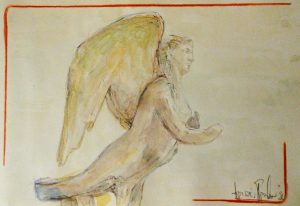
Aristea Gravou, watercolour on paper,2026
It is no coincidence that song was their greatest weapon. In the Odyssey, the Sirens do not attack through violence; they seduce through knowledge and music. They promise Odysseus that they know all things: everything that happened at Troy, everything unfolding in the world, even what lies hidden in the future. Their allure is not merely sensual, but intellectual. Desiring to hear their song without perishing, Odysseus orders his companions to bind him to the mast while they seal their own ears with wax. In doing so, he becomes the only mortal to hear the song of the Sirens and survive.
According to later traditions, this failure proved fatal for the Sirens themselves. Hyginus recounts that they were doomed to die if anyone managed to resist their enchantment. After Odysseus escaped through his cunning stratagem, the Sirens vanished or cast themselves into the sea. Other myths connect them to Persephone: before they possessed wings and claws, they were youthful companions of the goddess. When Hades abducted Persephone, Demeter transformed them into bird-like beings, either to aid in the search for her daughter or as punishment for failing to protect her.
This dual nature — seductive yet funerary — explains why the Sirens occupied such a singular place in ancient art. They were not merely monsters of the sea; they were “Muses of the Underworld,” creatures who sang between life and death. Perhaps this is why the ancients placed them upon tombs: not only to mourn, but to accompany the soul on its final journey.
Standing before the marble Sirens of the Museum today, one cannot help but feel that they are still singing. No longer to lure sailors to destruction, but to remind us of something profoundly human: that art and memory possess the power to triumph over oblivion.
Yet over the centuries, the image of the Sirens gradually transformed. Ancient Greek representations portrayed them almost exclusively as creatures with the body of a bird and the head of a woman. By the Hellenistic period, however — and especially during the late Roman and medieval eras — this image began to merge with other marine mythological beings, eventually giving rise to the now-familiar figure of the fish-tailed mermaid.
This transformation was neither sudden nor accidental. The civilizations of the Mediterranean and Near East continuously exchanged myths, symbols, and artistic motifs. Already in Mesopotamia and Syria there existed deities and demonic beings associated with water, depicted with human upper bodies and fish-like lower halves. The Syrian goddess Atargatis, for example, is considered one of the earliest figures connected to mermaid-like imagery. Her cult spread into the Hellenistic world, where depictions of aquatic female beings became increasingly widespread.
At the same time, the Greek world already possessed marine entities such as the Nereids, as well as figures like Scylla, associated with the dangers of the sea. During the early Christian and Byzantine periods, older pagan forms frequently merged within popular imagination. As a result, the Sirens gradually lost their avian bodies and acquired more “aquatic” characteristics, as the very word “Siren” became increasingly associated with the sea rather than the Underworld.
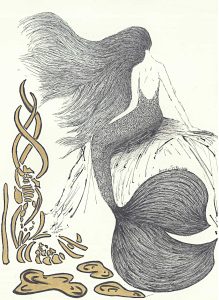
Aristea Gravou, Mermaid Wisdom, japanese jel ink on paper, 2021
Medieval Europe played a decisive role in this evolution. In the famous bestiaria — the illuminated books of beasts and monsters of the Middle Ages — Sirens are depicted almost exclusively as women with fish tails, symbols of temptation, vanity, and fatal seduction. The Church often employed their image allegorically, presenting them as personifications of sin leading humanity away from salvation, just as their songs once lured sailors toward destruction upon the rocks.
What is fascinating is that although their form changed, the essence of the myth remained remarkably intact. Whether winged or fish-tailed, the Sirens continued to symbolize the same enduring idea: the irresistible pull toward the unknown. They were always creatures of thresholds — suspended between life and death, knowledge and danger, desire and loss. Perhaps this is why their image survived so deeply within the collective memory of civilizations. The Sirens did not merely embody the fear of the sea; they embodied humanity’s eternal temptation to approach that which it knows may ultimately destroy it.
And so, from the winged “Muses of the Underworld” of ancient Greece emerged, little by little, the mermaids of fairy tales, maritime legends, and modern imagination — beings that continue, even today, to sing from the depths of human memory.
Bibliography
- Homer, The Odyssey, Book XII.
- Apollodorus, Library and Epitome.
- Pausanias, Description of Greece.
- Hyginus, Fabulae.
- Ovid, Metamorphoses.
- Burkert, Walter, Greek Religion.
- Vernant, Jean-Pierre, Myth and Thought Among the Greeks.
- Boardman, John, Greek Art.
- National Archaeological Museum of Athens, Sculpture Collection Catalogue.